
Top Signs You Need Garage Door Service — Don’t Ignore These
Most garage door failures don’t happen suddenly — they announce themselves weeks in advance through sounds, behaviors, and visual cues that are easy to miss when you use the door twice a day and stop actually looking at it. In South Florida’s climate, several of those cues are specific to heat and humidity and show up on a different timeline than they would anywhere else. Ignoring these early warnings in Boca Raton can turn a minor adjustment into an expensive emergency, especially when the relentless sun and salt air are at play.
The Groaning, Grinding, and Squealing Symphony: What’s Really Happening in Boca Raton’s Humidity
That awful noise your garage door makes when it opens or closes? It’s not just annoying; it’s a direct signal from your system that something’s out of tune. In Boca Raton, the high humidity can cause wood components to swell, and the intense heat can make metal parts expand. This expansion creates friction where there shouldn’t be any. A grinding sound, for instance, might feel like a problem with your springs or opener, but often, it’s the rollers binding in their tracks due to this localized expansion. We’ve seen many homeowners in neighborhoods like Royal Palm Yacht & Country Club mistake this for a more serious issue, leading them to schedule costly repairs prematurely. When you hear a persistent squeal, it often points to dry or worn bearings in the rollers or hinges. In our humid climate, these parts can corrode quickly, and if left unchecked, they’ll seize up entirely, potentially damaging the tracks themselves. Don’t dismiss these sounds as just “getting old”; they’re often the first whispers of impending trouble.
Slow Responses and Hesitation: More Than Just an Annoyance in Coastal Florida
If your garage door seems to be moving slower than usual, or it hesitates before starting its ascent or descent, that’s a significant red flag, especially here in Boca Raton. This isn’t just a matter of inconvenience; it’s a tell-tale sign that your spring system is struggling. Over time, and exacerbated by the constant cycles of expansion and contraction due to our climate, garage door springs lose tension. When a spring is weakened, it can’t provide the necessary counterbalance to the weight of the door. This means your opener motor has to work much harder to lift and lower the door. In the heat and humidity of South Florida, this extra strain can lead to premature motor burnout. We’ve observed this pattern frequently in areas near the coast, where salt air also contributes to corrosion on spring components. A slow or hesitant door is your system’s way of saying it’s fatigued and needs attention before the springs fail completely, which can result in the door dropping suddenly and dangerously.
Rust and Corrosion: Visual Cues You Can’t Afford to Miss in Boca Raton’s Environment
The salty air and humid conditions prevalent in Boca Raton are a recipe for rust and corrosion, and your garage door is no exception. While you might notice surface rust on the panels, the real danger lies in the less visible areas. We always advise our clients to inspect the bottom brackets, where the lifting cables attach to the door. Corrosion here can weaken the bracket to the point of failure, leading to a cable snapping and the door becoming uncontrollable. Similarly, check the cable drum anchors and the barrels of your hinges. These are critical components that, when compromised by rust, can cause cables to fray or hinges to seize. A common scenario we see in communities like Mizner Park is homeowners noticing rust streaks but not realizing the underlying structural integrity is being compromised. Regular visual inspections, particularly of these less obvious areas, can help you spot the early stages of corrosion before it leads to a major malfunction.
The Gap and Balance Tests: Simple Checks for Peace of Mind in Boca Raton
You don’t need to be a technician to perform two simple, yet incredibly effective, diagnostic checks on your garage door. These tests can reveal critical information about the health of your springs and cables, saving you from unexpected failures.
The Gap Test:
With your garage door fully closed, look for a visible gap between the bottom of the door and the floor. Ideally, there should be no gap, or just a very slight one. If there’s a noticeable gap, it indicates that your springs are losing tension and can no longer hold the door down firmly. In Boca Raton’s climate, this can be accelerated by the constant expansion and contraction of the door and its components.
The Balance Test:
Manually open your garage door about halfway. Now, let go. A properly balanced door should stay in that position without drifting up or down. If the door slams shut, your springs are likely too strong or have too much tension. If it shoots upwards, your springs are worn out and have lost their tension. We’ve seen this test save homeowners in the Addison Mizner area from potential injury by identifying weak springs before they failed under the door’s full weight.
These 60-second checks are invaluable for any Boca Raton homeowner and can alert you to issues with your springs and cables before they reach a critical point.
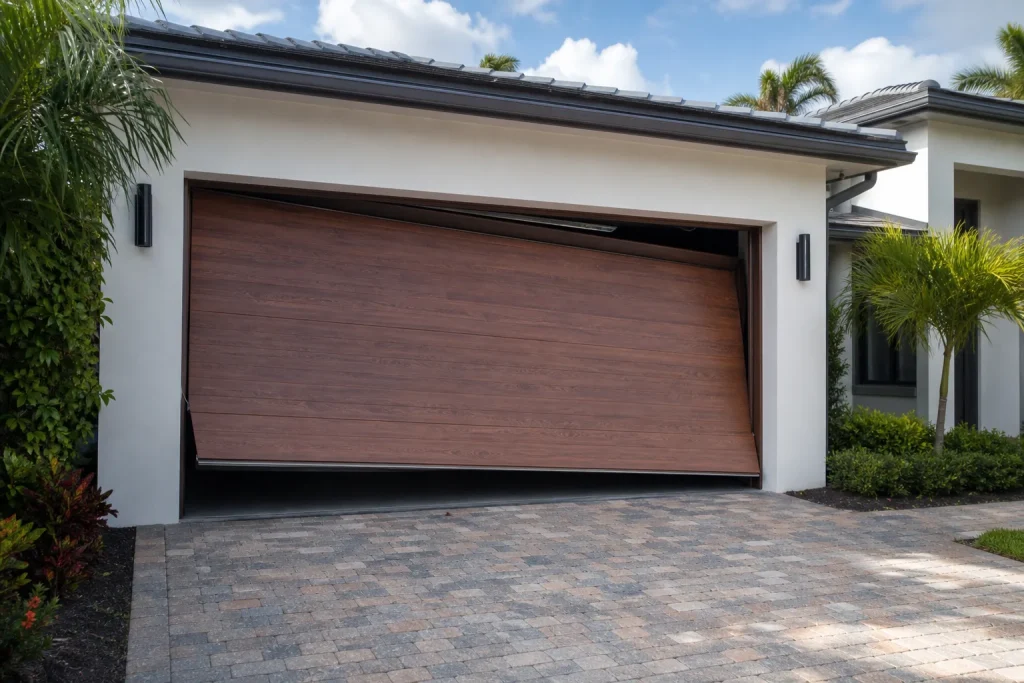
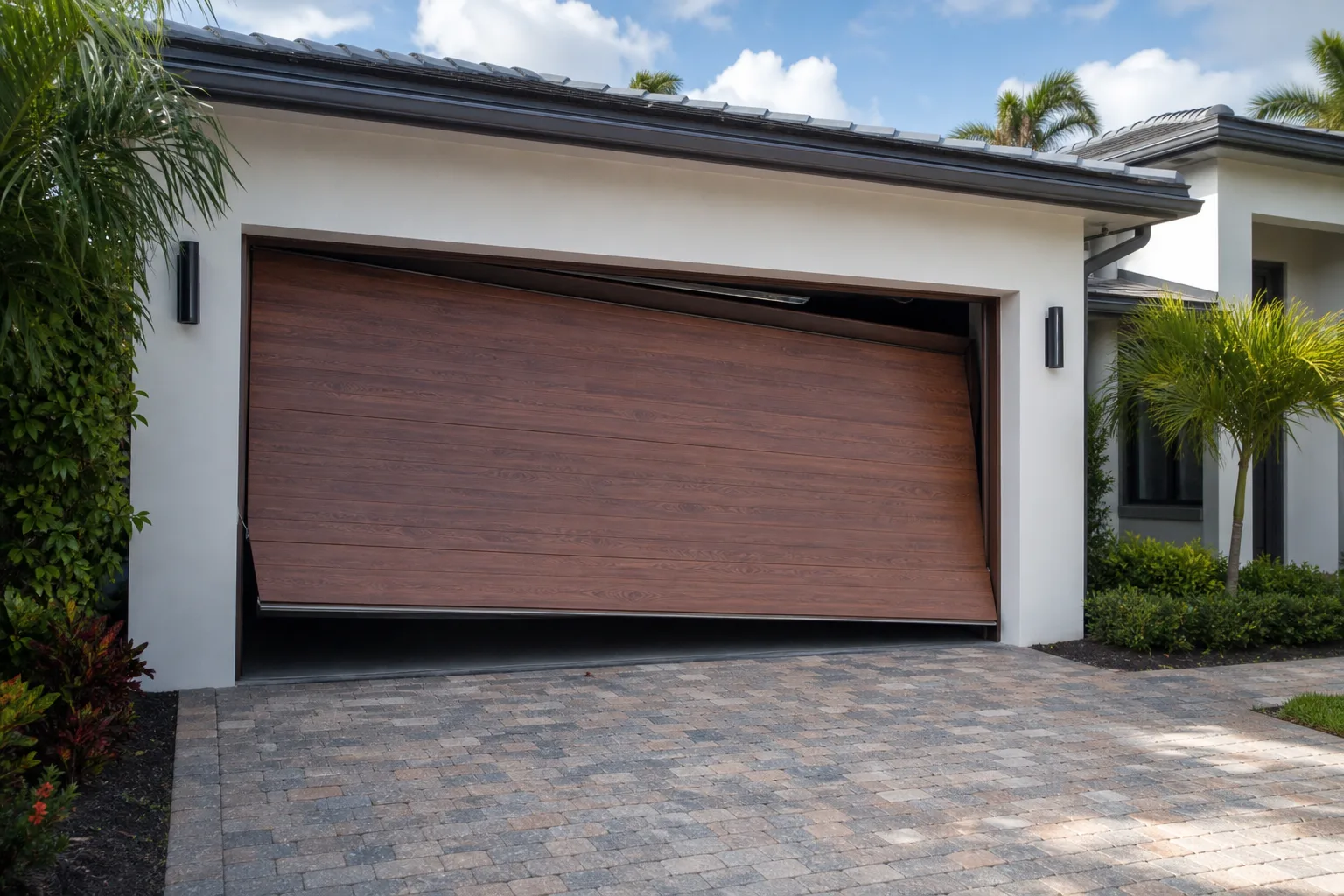
An Off-Track Door: A Higher-Stakes Mistake in South Florida
A garage door that’s slightly off-track might seem like a minor nuisance, but in the unique climate of Boca Raton, it can escalate into a serious problem with alarming speed. The intense heat can cause the garage door panels, especially if they’re made of wood or certain composite materials, to warp. Similarly, humidity can cause swelling. When a door is already struggling to stay within its tracks, these environmental factors can quickly exacerbate the issue. The uneven pressure from a warped or swollen panel can put immense stress on the tracks, bending them out of shape or even causing them to detach from the wall. We’ve seen this scenario unfold rapidly in areas with older homes, where the materials might be more susceptible. Ignoring a door that’s only slightly off-track in our environment is a gamble; what might seem like a small misalignment can turn into a completely dislodged door in a matter of days, or even hours, under the stress of Florida’s weather.
Key Takeaways for Boca Raton Homeowners
- Pay attention to unusual noises like grinding or squealing, which can indicate friction from humidity-swollen parts or worn components.
- A slow or hesitant garage door is a sign of weak springs, forcing your opener motor to overwork, especially in our hot climate.
- Inspect for rust and corrosion on less visible parts like bottom brackets and hinge barrels; salt air is a major culprit in Boca Raton.
- Perform the simple gap and balance tests regularly to assess spring tension and door balance.
- Never ignore a door that’s even slightly off-track, as heat and humidity can quickly worsen the problem in South Florida.
The Bottom Line
Your garage door is a complex piece of machinery, and like any mechanical system, it requires regular attention. The signs that it needs service are often subtle, but in the unique environment of Boca Raton, they can escalate quickly due to heat, humidity, and salt air. By understanding these specific warning signs, you can catch minor issues before they become costly emergencies. If you’re in Boca Raton and noticing any of these symptoms, or just want peace of mind with a professional inspection, American Garage Door Service Boca Raton offers free estimates. Don’t wait for a breakdown; call us today at (833) 842-7239.
Frequently Asked Questions
The most common reasons for garage door repair in Boca Raton are related to the local climate: wear and tear on springs and cables due to constant use and expansion/contraction from heat and humidity, corrosion from salt air affecting hardware, and opener issues stemming from overworked motors trying to lift a struggling door.
You can tell if your garage door springs are failing if the door opens or closes very slowly, hesitates during movement, or if you hear loud popping noises. The balance test, where you open the door halfway and let go, is a good indicator; if it slams shut or shoots up, the springs are likely failing.
It’s generally not safe to operate a garage door that’s making strange noises, especially grinding or loud popping sounds. These noises often indicate underlying mechanical issues, such as worn rollers, damaged tracks, or failing springs, and continuing to use the door could lead to further damage or a dangerous failure.
In Florida’s climate, it’s advisable to have your garage door professionally serviced at least once a year. The combination of heat, humidity, and salt air can accelerate wear and corrosion on components, making regular maintenance crucial for preventing unexpected breakdowns and ensuring safety.
Written by the team at American Garage Door Service Boca Raton, serving Boca Raton since 2022.
Need Garage Door Help?
Call American Garage Door Service Boca Raton — licensed & insured, here with fast after-hours help in Boca Raton.
(833) 842-7239